
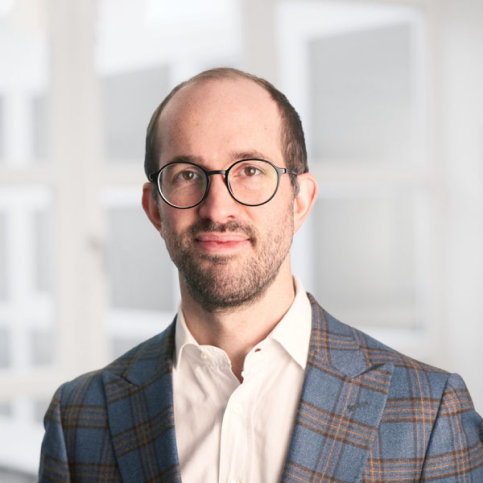

Interviewer: Philip, welcome! Let’s begin with a bit of your background. What brought you into clinical research?
Philip Raeth: My path into clinical research was a little unconventional. I originally studied business administration and had some experience in IT, but clinical research wasn’t something I planned. Around 2011, I was exploring more entrepreneurial directions and spoke with my stepmother, who had been working in the industry for years. Through those conversations, and with her mentorship, I joined the field, starting on the business side.
Initially, my role focused on financial planning and business development, which gave me a solid understanding of how CROs function. As I became more immersed, I expanded into data-driven areas like pharmacovigilance and clinical data management. Over time, I gained a broader view of the operational landscape, which helped shape my leadership perspective. Today, as Managing Director at Palleos, I still approach the business from both a technical and strategic lens. I believe having both viewpoints is essential, especially as the clinical trial space continues to evolve.

Interviewer: And how did you develop a specific interest in innovative trial design?
Philip Raeth: Great question. It actually began quite organically. Several years ago, we were recruiting a new head statistician, and part of the hiring process included a presentation on a topic of their choice. This candidate, who later joined us, chose to discuss how most clinical trials still rely heavily on traditional statistical models, which he argued were outdated and often inefficient. He introduced Bayesian trial design to us, which was eye-opening. The idea that you could continually evaluate real-time data, rather than waiting until the end of a fixed enrollment, just made sense. At the time, I wasn’t deeply familiar with the model, but the logic was compelling: if you’re collecting valuable data as patients move through the trial, why not use it to adapt the study?
That experience sparked a shift in how I viewed trial design — not just as a technical exercise, but as a strategic opportunity. Since then, we’ve become increasingly focused on adaptive and Bayesian methodologies, particularly in the academic and early-phase trial space where there’s more room for innovation.
Interviewer: That sounds promising. So why aren’t more companies using these modern approaches?
Philip Raeth: It’s a mix of factors. The short answer is: flexibility comes with complexity and cost. Adaptive trial designs sound efficient, and they can be, but they require much more effort in planning, data management, and regulatory alignment.
For example, to conduct an interim analysis using Bayesian principles, you need extremely clean, verified data at specific checkpoints. That means more frequent site visits, source data verification, and statistical preparation, all while recruitment continues in parallel. There’s also the issue of “wasted” patients. If you end up stopping early, any patients recruited during the analysis window might not contribute to the final data set.
Then there’s the regulatory side. Many authorities are still getting used to these models, and gaining approval can take longer. We’ve spent months, even a year in some cases, aligning on design acceptance with agencies. In contrast, a traditional fixed trial design is predictable and familiar — regulators know what to expect, sponsors know how to budget, and the perceived risk is lower. So while innovative designs offer efficiency and insight, they demand more upfront investment and strategic patience.
Interviewer: Do you think that mindset is changing in pharma and biotech?
Philip Raeth: Slowly, yes. But we’re not there yet. Most large pharma companies are still cautious. They often operate under risk-averse frameworks, and trial design is one area where change happens gradually. However, we are seeing more openness in early-phase trials, especially among smaller biotechs and academic sponsors. They’re more willing to experiment because the stakes are different, budgets are tighter, and there’s often more intellectual curiosity driving the process.
That’s where we’ve been able to collaborate most meaningfully, helping these sponsors explore designs that align better with their scientific goals. Still, the commercial sector hasn’t fully embraced these methods. Partly because change requires not only scientific rationale but also operational infrastructure, skilled personnel, and regulatory advocacy. It’s a full-system shift, and not every company is ready for that.

Interviewer: Can you give us an example of how you’ve implemented an adaptive trial?
Philip Raeth: Absolutely. One of the most relevant examples is a breast cancer immuno-oncology trial we began working on in 2020. It was our first full implementation of a Bayesian adaptive design. We had already been discussing this approach with the academic sponsor since 2018–2019, and they were very supportive of trying something new.
The idea was to conduct interim analyses at predetermined enrollment milestones. Let’s say at 100, 150, or 200 patients, and evaluate whether we were seeing a positive treatment signal. If the data showed strong efficacy or futility, we could potentially stop early, saving both time and resources. It required careful planning: setting stopping boundaries, defining success thresholds, and making sure the data collected was ready for timely evaluation.
What we learned through this process is that flexibility also means operational discipline. You can’t improvise once the trial is running. Every analysis window has to be prepared in advance, the statistical models pre-agreed, and all data processing pipelines fully functional. It was an incredible experience, and although it was challenging, it proved that with the right preparation, adaptive trials are absolutely achievable.
Interviewer: That’s fascinating. So where do you see the future of clinical trial design heading?
Philip Raeth: I think we’ll see a gradual but steady transition. The more we talk about real-world data, digital endpoints, and personalized medicine, the more clear it becomes that our trial frameworks need to evolve. Adaptive designs — and Bayesian thinking in particular — align well with these trends. They allow for smarter, more responsive studies that reflect real-time understanding rather than static assumptions.
That said, it will take time. Education is key — both within companies and at the regulatory level. It also requires a shift in how we view risk. Right now, sticking to the traditional path often feels “safer,” but in the long run, innovation could lead to more efficient drug development, better patient outcomes, and lower overall costs.
At Palleos, we’re committed to being part of that transformation, supporting sponsors who are ready to explore these designs and helping to build the infrastructure and trust needed to make them more mainstream.
Interviewer: Thank you, Philip. This has been a thoughtful and highly informative discussion.
Philip Raeth: Thank you. I truly enjoyed this exchange. And I’m glad we could shed some light on a topic that has the potential to reshape how we approach clinical development.
With a proven track record in clinical research management and deep expertise in adaptive trial design, Palleos offers full-service solutions across phase I–IV clinical trial services. As a trusted CRO in Europe, we specialize in clinical trial monitoring services, clinical operations, and oncology clinical research. Reach out to learn how we can support your next trial.